 Mozambique
2024/25 Establishing a Natural Gas Utilization System in Mozambique
Turning Abundant Natural Gas into Energy that Benefits People
2026. 08. 31
Mozambique Finds a Path Forward in Korea's NGV Policy Experience
A KSP case that shared Korea’s experience in NGV deployment and safety management and connected policy knowledge to local implementation and business cooperation
OVERVIEW
| Project | Establishing a Natural Gas Utilization System in Mozambique (Formulation of an NGV Expansion Strategy) |
|---|---|
| Commissioning Agency | Korea Trade-Investment Promotion Agency (KOTRA) |
| Implementing Organizations | Korea Enterprise Institute (KEI), Korea Association for Natural Gas & Fuel Cell Electric Vehicles (KANFV) |
| Partner Ministry | Ministry of Mineral Resources and Energy of Mozambique (MIREME) |
| Project Period | 2024–2025 (two field surveys, interviews with 12 policy institutions, public enterprises and private companies, and one policy training program in Korea) |
| Field Surveys | 1st: April 8–17, 2025 (Maputo) / 2nd: June 16–22, 2025 (Maputo) |
| Policy Training in Korea | July 14–18, 2025, Seoul·Daejeon·Busan·Tongyeong / 12 officials and practitioners from Mozambique’s government and public institutions |
| Key Local Stakeholders | MIREME, Petromoc, Metropolitan Transport Agency (AMT), Ministry of Transport and Logistics (MTL), National Institute of Road Transport (INATRO), Vehicle Technical Inspection Center (ITVM), ENH and ENH-KOGAS, FUNAE, INP, Maputo Port Development Company (MPDC), and Korean–Mozambican public and private stakeholders including Autogas, FMC, MozGNV, Coca-Cola, KNC and KANFV |
| Key Achievements |
|
The Gap Between Resource Abundance and Reality
In 2011, a giant offshore gas field estimated at about 187 TCF—roughly equivalent to 100 years of Korea’s gas consumption—was discovered off northern Mozambique. Together with the Temane gas field in Inhambane Province and the offshore Rovuma gas fields in the north, this discovery elevated Mozambique into the ranks of Africa’s major gas-rich countries.
Despite its abundant natural gas resources, domestic use in the transport sector remained limited. Much of the produced gas was exported to South Africa by pipeline, while Mozambique’s transport sector continued to rely heavily on costly imported gasoline and diesel. Additional supply infrastructure was therefore needed to turn the country’s abundant gas resources into a domestic transport fuel.
The Government of Mozambique had also pursued policies and master plans to expand domestic use of locally produced natural gas. Yet despite this policy direction, the refueling infrastructure, vehicle conversion and inspection systems, safety standards, and phased implementation mechanisms needed to expand natural gas use in transport were not yet sufficiently developed.
Approx. 187 TCF
Northern offshore gas reserves · roughly 100 years of Korea’s gas consumption
25%
25% of produced gas for domestic consumption (local-content framework)
“The plans existed, but a phased pathway was needed to turn policy into implementation.” The challenge was not the absence of plans, but the need to set policy
priorities and strengthen implementation capacity. With infrastructure expansion, legislation and safety management closely intertwined, Mozambique needed clear priorities and a phased approach to translate policy direction
into actual projects.

What was needed, therefore, was not another plan, but practical priorities and a phased implementation pathway informed by the policy, institutional and industrial experience of a country that had already deployed NGVs. This is where the KSP connected Korea's experience with Mozambique's policy needs.
Why Korea? — A Country with Full-Cycle Experience in NGV Deployment
Mozambique’s Ministry of Mineral Resources and Energy (MIREME) formally requested the Knowledge Sharing Program (KSP) from the Korean government to address two priorities at once: energy transition and public-transport modernization.
Korea expanded CNG buses to improve urban air quality while developing not only vehicle-deployment policies but also refueling infrastructure, vehicle and pressure-vessel inspections, safety management, technical standards and related industries. In particular, policy support from the central government and a deployment system involving local governments, transport operators, public enterprises and private companies created the foundation for NGVs to take root in the public-transport system. Korea’s experience was especially relevant because it extended beyond upstream gas development to a downstream value chain that safely delivered gas to everyday users through buses, refueling stations and city-gas networks.
Korea’s experience mattered to Mozambique not simply because Korea had deployed many CNG buses, but because it had accumulated full-cycle policy experience: building refueling stations alongside vehicle deployment, managing the safety of vehicles and gas cylinders, operating inspection and certification systems, and fostering an industrial ecosystem in which relevant companies could participate.
| Korea’s Policy Experience | Challenges in Mozambique | Sharing and Adaptation through KSP |
|---|---|---|
| CNG bus deployment policy for urban air-quality improvement | Dependence on imported gasoline and diesel | Creation of an initial market centered on public buses |
| CNG refueling-station development and operation | Seven refueling stations and limited pipeline coverage | Distributed Mother–Daughter supply |
| Vehicle/cylinder inspection and safety management | No NGV-specific inspection procedure | Proposed inspection, certification and cylinder-safety system |
| Vehicle manufacturing/conversion and certification | Insufficient certification system for converted vehicles | Proposed government-recognized conversion and certification system |
| LNG/CNG supply infrastructure | Regional gaps in gas supply | Proposed CNG + ssLNG supply model |
| Role sharing among government, public enterprises and private companies | Weak linkage between policy and implementing actors | Proposed phased implementation and public–private cooperation model |
Identifying Implementation Priorities on the Ground — From Policy Institutions to Refueling Stations, Bus Depots and Ports
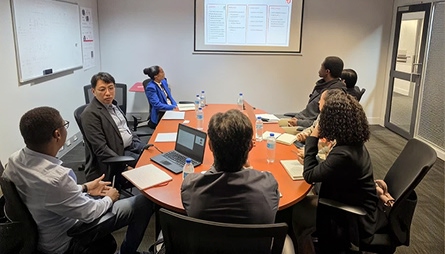
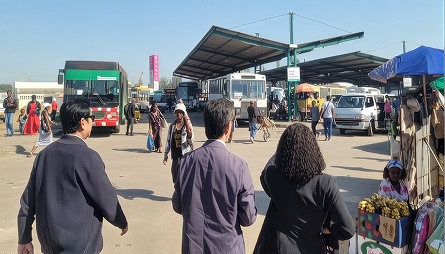
KOTRA and the KSP research team went beyond desk review. During two field missions to Maputo in April and June 2025, they interviewed 12 policy institutions, public enterprises and private companies. The team directly visited bus depots, CNG refueling stations, vehicle-conversion centers, vehicle inspection centers, port facilities and logistics companies to assess both the conditions for NGV deployment and Mozambique’s policy and industrial needs.
During the first survey, the team discussed policy direction and implementation status with MIREME, AMT, INATRO, ENH-KOGAS and other stakeholders, and visited a public bus depot, private refueling stations and vehicle-conversion sites in Maputo. This confirmed demand for converting existing vehicles to natural gas, the need to expand refueling infrastructure, priorities for strengthening inspection and safety management, and the growth potential of the local vehicle-conversion industry.
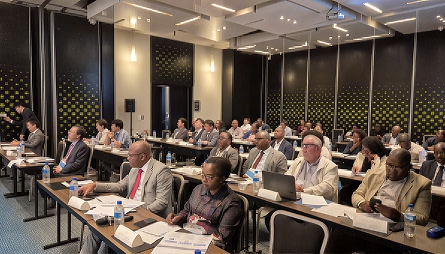

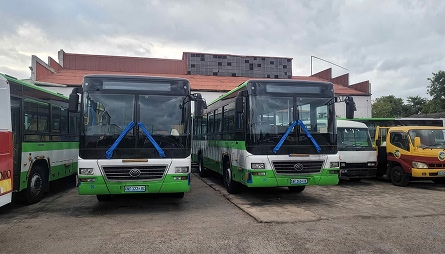
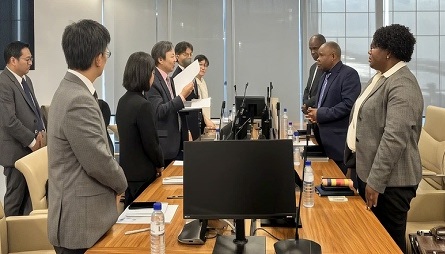
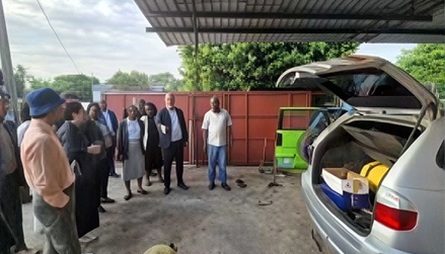
The second survey focused more closely on operating data and potential demand. Interviews with INATRO-related institutions indicated that 19 vehicle inspection centers were operating nationwide at the time, but no separate NGV-specific inspection procedure had yet been established. This highlighted the need to progressively strengthen vehicle conversion and inspection procedures and gas-cylinder safety-management capacity, building on Mozambique’s existing vehicle inspection system as NGV deployment expands.
Korea operates public and private inspection systems for approximately 27 million registered vehicles and maintains statutory inspection requirements for CNG vehicles and pressure vessels. Because the two countries differ in their vehicle-inspection systems and operating models, Korea’s system was used as a reference for considering Mozambique’s future NGV inspection and safety-management framework rather than for a simple comparison of facility numbers.
Reference: Korea–Mozambique Operating Conditions for Developing an NGV Inspection System
| Category | Mozambique | Korea |
|---|---|---|
| Registered vehicles | Approx. 1.31 million | Approx. 27 million |
| Vehicle inspection centers | 19 | Approx. 1,800 |
| NGV-specific inspection procedure | Not established | Statutory periodic inspection |
Because the two countries differ in their vehicle-inspection systems and operating models, these figures were used as reference information for developing Mozambique’s future NGV inspection system rather than as a direct comparison.
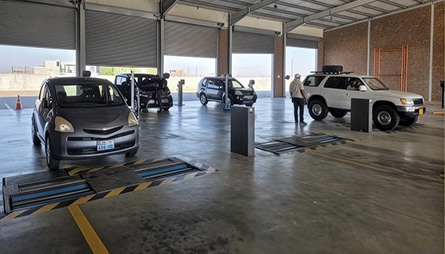
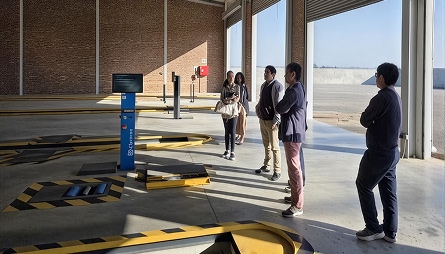
The survey confirmed the need to expand NGV inspection and safety-management capacity based on the existing inspection system.
The surveys also identified potential for increased natural-gas demand in public transport and logistics. According to AMT survey data, the bus operating system examined in the Greater Maputo area included 15 operators running 438 buses over approximately 3,807 km of routes. The medium-term plan shared by AMT during the field survey included consideration of CNG bus introduction, while a separate public-transport modernization initiative using international development finance was also under way. These policy trends indicate potential for broader deployment of low-carbon public transport, including CNG and electric buses.
The team also assessed natural-gas conversion opportunities in the port and logistics sector. Maputo Port Development Company (MPDC) expressed interest in converting cargo-handling equipment and logistics vehicles to natural gas, while Coca-Cola Mozambique shared data from a 2023 CNG truck pilot. The pilot showed differences in economics and applicability by vehicle type; in particular, heavy-duty trucks showed greater potential for fuel-cost savings as mileage and fuel consumption increased.
| Vehicle Type | Pilot Result |
|---|---|
| Dual-Fuel Light-Duty Vehicle (LDV) | Low economic viability · limited availability of gasoline vehicles suitable for bi-fuel conversion |
| Dual-Fuel Heavy-Duty Vehicle (HDV) | Investment: USD 12,000 · annual savings: USD 8,000 · greater benefits at scale |
| Mono-Fuel Heavy-Duty Vehicle (HDV) | Highest savings · however, only one manufacturer and vehicle price about 80% higher than diesel |
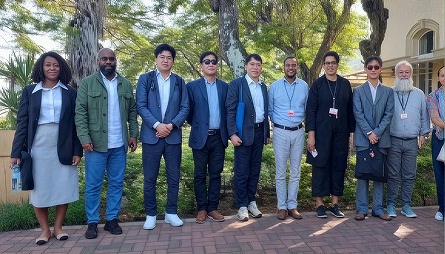
The private sector was also taking steps to expand the NGV market. At the time of the field survey, MozGNV was pursuing refueling infrastructure in Chókwè, Xai-Xai and the Mavil area, as well as a vehicle-conversion center with support from SASOL. In this process, Korea’s Kwangshin Machine Industry was engaged in technical cooperation in CNG compressors, while KNC was cooperating with local companies on vehicle-conversion technology and related parts.
FUNAE also explained during local meetings the potential to expand natural-gas supply by using existing fuel-supply hubs, while ENH was pursuing greater domestic natural-gas use based on its existing gas master plan and gas-supply experience in Maputo and Vilankulo. These initiatives across government, public enterprises and private companies showed that Mozambique was gradually building the policy and market foundations needed to expand domestic natural-gas utilization.
Three Policy Priorities Identified through the Field Surveys
Examine a distributed refueling and supply system that uses the existing gas network while extending natural gas to areas beyond pipeline coverage
Gradually strengthen the institutional foundation required for NGV expansion, including vehicle conversion/certification, gas-cylinder inspection and refueling-facility safety management
Use public buses as initial demand and establish a phased deployment strategy that later expands to logistics and commercial vehicles
Turning Korea’s Experience into Mozambique-Specific Solutions — Three Implementation Strategies
The objective of the KSP was not to transplant Korea’s CNG policy directly into Mozambique. Rather, the project drew on Korea’s experience in vehicle deployment, refueling infrastructure, inspection and certification, and safety management, and worked with Mozambican institutions to develop policy options suited to local conditions. The field surveys identified three key bottlenecks—limited pipeline coverage, gaps in safety standards, and unclear implementation priorities. The KSP team designed a policy package to address these constraints.
Distributed Refueling Hubs to Overcome Pipeline Limitations (Mother–Daughter & ssLNG)

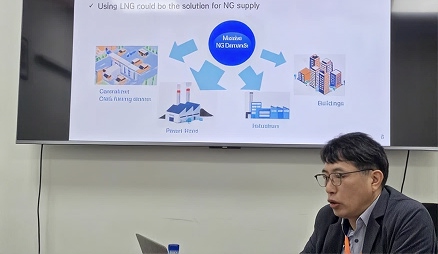
Considering Mozambique’s limited gas pipeline network and vast territory, the KSP proposed distributed supply options to extend natural-gas use beyond pipeline-served areas. It examined a Mother–Daughter model in which CNG is transported from a gas-supplied Mother Station to Daughter Stations outside the pipeline network, while also presenting small-scale LNG (ssLNG) as an option for longer-distance transport and heavy-duty commercial-vehicle demand.
In particular, the project examined phased network expansion along the N1 corridor from Maputo toward Inhambane and around major hub cities. MozGNV’s plans, identified during the field survey, to develop refueling infrastructure in Chókwè, Xai-Xai and the Mavil area were aligned with the KSP’s distributed-supply concept in their shared objective of extending natural-gas use beyond the pipeline network, illustrating potential linkages between policy and private-sector projects.
Building a Local Inspection and Certification System Based on Korea’s Safety-Management Experience
Drawing on Korea’s experience in the safety management of NGVs and refueling facilities, the KSP proposed refueling-station safety guidelines suited to Mozambique’s existing institutions and infrastructure. It also proposed the introduction of a vehicle conversion and certification system to ensure safe conversions, together with a periodic inspection system for gas cylinders. Particular emphasis was placed on building a sustainable safety-management framework by using the existing vehicle inspection system while progressively adding NGV-specific procedures, specialized personnel and inspection capacity.
A Three-Stage Implementation Roadmap

Pilot conversion of public transport (public buses) in the capital region and establishment of basic safety standards in legislation
Expand refueling infrastructure along major trunk roads and in hub cities
Convert heavy-duty logistics trucks to natural gas and build a nationwide mobility ecosystem
Seeing Policy, Verifying Technology and Connecting Companies — Field-Based Policy Training in Korea
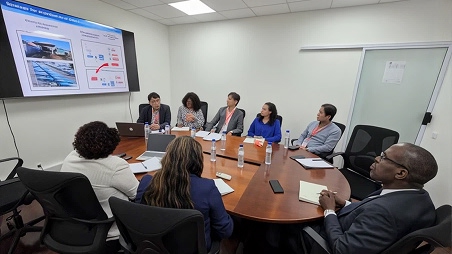
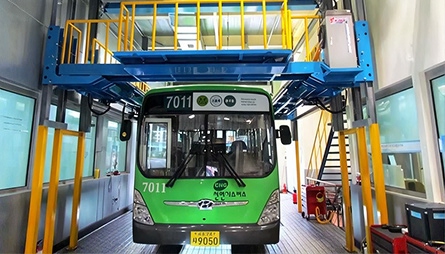
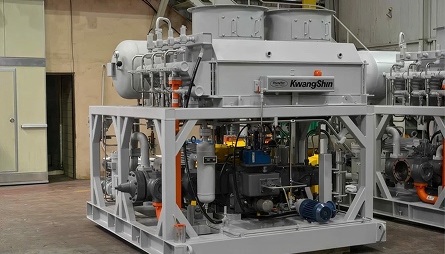
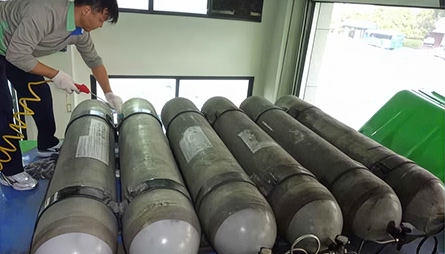
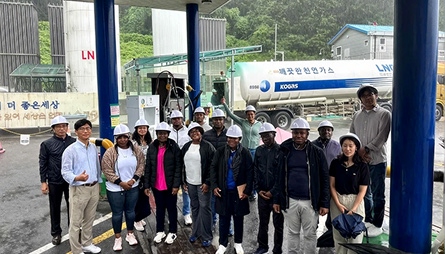
Twelve practitioners from MIREME, FUNAE, Petromoc, MTL and MozGNV visited Korea for the interim reporting session and policy-practitioner training. The program went beyond policy briefings and was designed as a field-based knowledge-sharing program in which Mozambican participants could directly observe Korea’s NGV ecosystem. At CNG bus depots and refueling stations they examined actual operating systems; at a vehicle inspection center they observed inspection and safety procedures for CNG vehicles and pressure vessels; and at a compressor manufacturing facility they reviewed core refueling-infrastructure technologies. Visits to LCNG facilities and an LNG receiving terminal further demonstrated Korea’s full-cycle supply system from natural-gas import to vehicle-fuel supply.
At the technical seminar, Korea Gas Corporation, Korea Gas Technology Corporation, Korea Transportation Safety Authority, Kwangshin Machine Industry, Hyundai Motor Company and KNC delivered presentations, followed by MozGNV, which introduced its local business status and cooperation opportunities. The Mozambican delegation and Korean NGV companies also engaged in substantive discussions and Q&A.
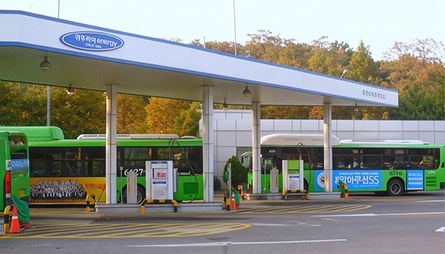
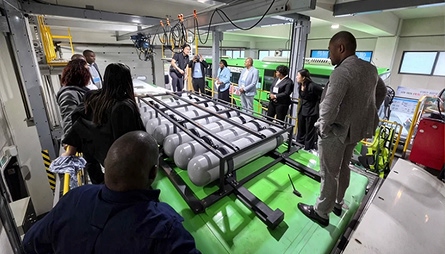
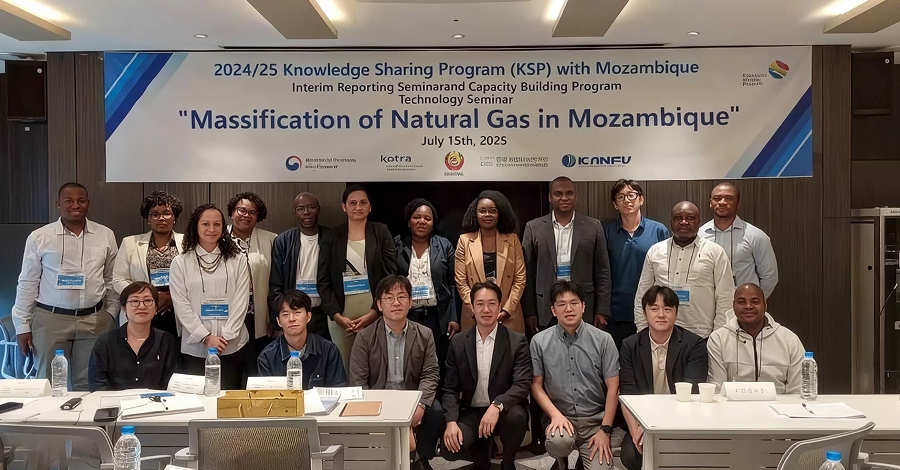
At the interim reporting session, the team presented survey findings and held discussions and Q&A with participants. The delegation also visited a public bus depot and CNG refueling station. At a vehicle inspection center, participants directly observed Korea’s reinspection system and actual inspection procedures for CNG-bus pressure vessels, providing an operational reference for Mozambique’s future NGV inspection and safety-management framework. The program continued with visits to an LCNG station, a compressor production facility, a port LNG refueling facility and an LNG receiving terminal, allowing participants to see the full Korean value chain from gas import to vehicle deployment.
Three Outcomes of the Policy Training

Understanding CNG deployment, refueling, inspection and safety-management systems
Observing implementation models at actual refueling stations, inspection centers, depots and manufacturing facilities
Direct business-cooperation discussions between Mozambican government/companies and Korean NGV companies
From Policy Sharing to Business Cooperation
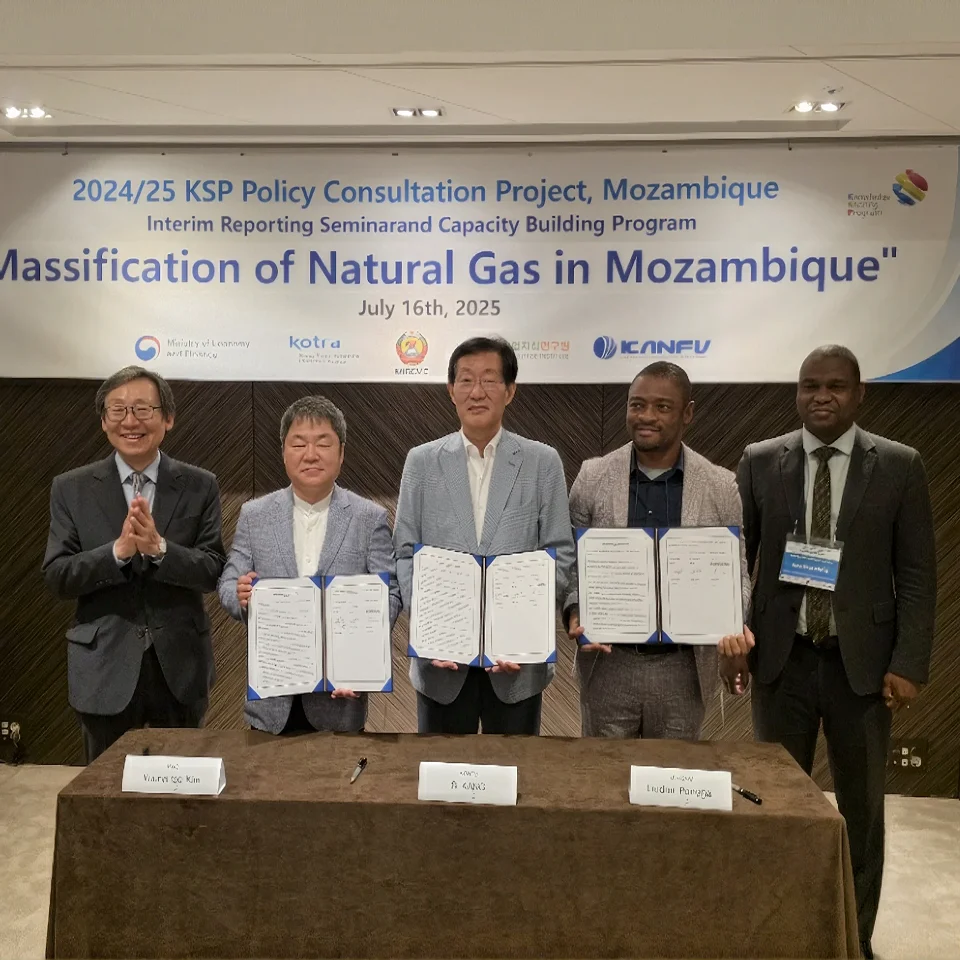
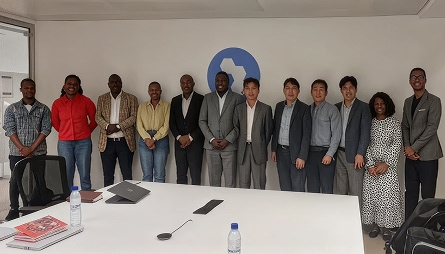
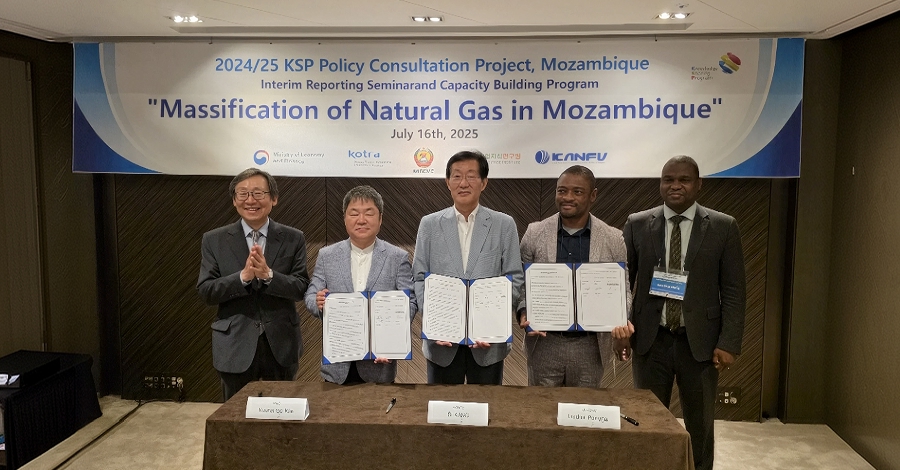
On July 16, during the interim reporting program, Korean vehicle-conversion specialist KNC, Mozambican natural-gas company MozGNV and KANFV signed a trilateral MOU to promote technology transfer for natural-gas vehicle conversion and broader NGV deployment.
The MOU went beyond a conventional company-to-company agreement by translating needs identified through the KSP field surveys and policy training into concrete industrial-cooperation agendas. It created a basis for practical cooperation on technology transfer for converting diesel and gasoline vehicles to natural gas, supply of related parts, development of specialized personnel and local market creation.
Business-Entry Linkage Structure
KSP field surveys
Identification of local policy and industrial needs
Sharing of Korean NGV policy and technology
Visit to Korea and industrial sites by Mozambican stakeholders
Identification of cooperation opportunities between Korean and Mozambican companies
Trilateral MOU
Pursuit of follow-up technical cooperation and commercialization
Roles of Korean Companies and Related Institutions
Potential technology and product cooperation in CNG compressors and refueling equipment
Cooperation on NGV conversion technology, related parts supply, local technology transfer and workforce development
A foundation for policy and technical cooperation across the full NGV deployment cycle, including vehicles, refueling infrastructure, inspection/certification, safety management and operating technologies
Through these activities, the KSP served as a bridge from policy advisory work to the identification of local demand, policy sharing, technical cooperation and potential market entry for Korean companies.
“This is an action-oriented MOU based on concrete cooperation measures identified through policy training, industrial site visits and practitioner exchanges, rather than a declaration alone. By sharing Korea’s advanced NGV technologies and institutions with a resource-rich African country, we aim to create a model of mutual development.”
Cooperation Developed through KSP — From Policy Consensus to Follow-Up Projects
The KSP advisory work did not end with a report. It moved toward local policy alignment and practical public–private business cooperation.
During the KSP advisory process, intensive discussions were held with the Mozambican government and related institutions on CNG bus introduction in Greater Maputo, expansion of refueling infrastructure, and development of vehicle conversion, inspection and certification systems. By connecting existing policy initiatives, including AMT’s CNG bus plans, with the phased NGV expansion approach proposed by the KSP, the project strengthened policy consensus and the basis for implementation cooperation.
Building on government and public-enterprise relationships formed through the KSP, the parties discussed follow-up cooperation with ENH on NGVs and refueling infrastructure and developed working-level cooperation for identifying subsequent projects, including preparation of a PCP by the Korean side and support for an LOI by the Mozambican side. Additional cooperation opportunities in small-scale LNG were also discussed with MIREME, creating a basis for linking KSP policy advisory work to follow-up development-cooperation projects.
Next Steps — From Knowledge Sharing to Expanded Development Cooperation
This KSP went beyond a one-off policy advisory exercise by creating a foundation that connects Mozambique’s goal of expanding domestic natural-gas utilization with Korea’s NGV policy, technology and industrial experience. Going forward, implementation priorities—including refueling infrastructure, vehicle conversion, safety and inspection systems, and workforce development—should be progressively developed based on the KSP roadmap and linked to Korean companies’ local participation and broader bilateral energy and industrial cooperation.
Build on cooperation in NGVs and refueling infrastructure to broaden collaboration into areas such as ssLNG and industrial natural-gas supply, supporting greater domestic use of Mozambique’s natural gas.
Starting with NGV deployment in public transport, establish the full-cycle foundation needed for natural-gas use, including vehicle conversion, refueling and supply infrastructure, inspection and safety management, and workforce development, while exploring longer-term links to industrial gas supply and related fields.
Based on the policy roadmap produced through the KSP, progressively identify and develop implementable follow-up projects such as pilot refueling and gas-supply infrastructure, vehicle-conversion demonstrations, and safety/inspection systems.
Enable Korean companies in NGV equipment, vehicle conversion, refueling systems, inspection and safety management to identify business opportunities and cooperate with local partners in Mozambique, creating a bridge for future expansion into neighboring African markets.
Why This Project Is a Strong KSP Success Story
From Policy Sharing to Implementation and Industrial Cooperation — Four Achievements of the Mozambique KSP
Rather than simply transferring Korea’s experience in CNG bus deployment, refueling infrastructure, inspection/certification and safety management, the project redesigned it as a policy package suited to Mozambique’s gas-supply network and transport and industrial conditions.
Through two field surveys, the project directly examined not only government institutions but also public enterprises, refueling stations, vehicle-conversion centers, bus depots, inspection centers, ports and logistics companies, identifying implementation priorities that considered both policy and market conditions.
Twelve Mozambican policy and industry representatives directly observed Korea’s CNG buses, refueling stations, vehicle inspections, pressure-vessel safety management, compressor manufacturing and LNG supply facilities, strengthening their understanding of the policy recommendations and their practical applicability.
Cooperation needs identified during the KSP led to the KNC–MozGNV–KANFV trilateral MOU and technical cooperation involving Korean NGV companies, while also creating a basis for discussing follow-up cooperation with ENH, MIREME and other stakeholders.
Beginning with Mozambique’s paradox—abundant gas resources alongside continued dependence on imported liquid fuels—this KSP did more than introduce Korea’s development experience. It translated Korea’s accumulated policy, institutional, safety-management and industrial experience in NGV deployment into practical approaches suited to Mozambique, strengthened policymakers’ implementation capacity through field surveys and training in Korea, and connected the process to technical cooperation between Korean and Mozambican companies.
By creating a virtuous cycle from policy advisory work to knowledge sharing, from knowledge sharing to business cooperation, and onward to follow-up development cooperation, the project represents a meaningful example of a KSP model linking policy sharing with industrial cooperation.
Enabling Mozambique’s abundant natural gas to serve as energy for mobility and industry—while combining Korea’s policy experience with the technological capabilities of Korean companies—is the most important change initiated by this KSP and the direction for continued cooperation.