 Malaysia
's Journey to Safer Railways
2,100km of Safety: Bringing Korean Rail Expertise to Malaysia
2026. 08. 07
2,100km of Safety: Bringing Korean Rail Expertise to Malaysia
Malaysia operates a railway network spanning approximately 2,100 km and is continuously expanding its urban and intercity rail systems. While railways have become a core infrastructure essential to the nation’s economy and public mobility, network expansion alone does not guarantee safety.
At the onset of this project, Malaysia faced challenges, including insufficient legislation and technical standards for railway safety, as well as a lack of comprehensive accident investigation systems and specialized personnel. Furthermore, as its railway systems were largely built on foreign technology, the country faced limitations in maintenance and technical localization.
To address these challenges, the Malaysian Ministry of Transport (MOT) officially requested a KSP based on the 2019 Korea-Malaysia Transport Cooperation MOU, seeking to share Korea's expertise. The goal was not merely to refine existing regulations but to modernize the entire railway safety management system.
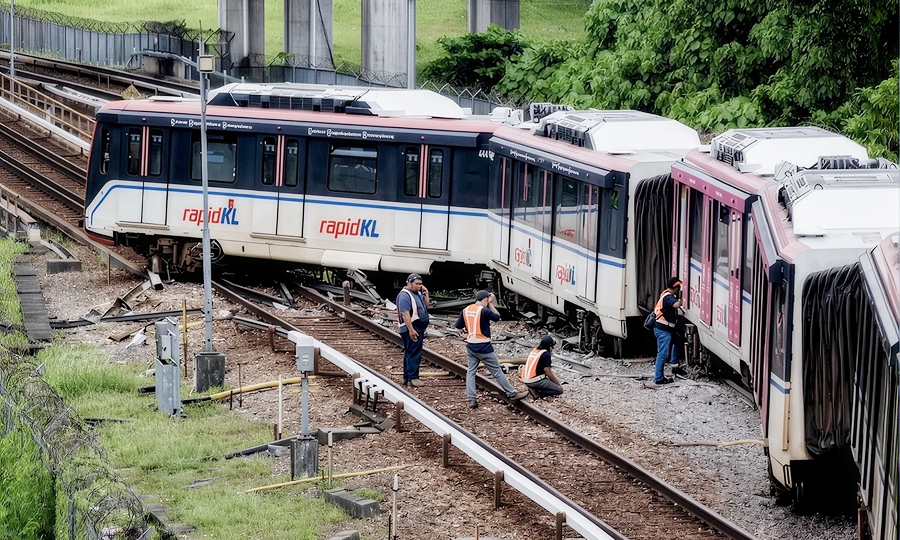
Bridging Korean Expertise with Malaysian Policy
Leveraging 20 years of experience since the launch of KTX, Korea has developed a national safety management system where legislation, technical standards, safety certification, accident investigation, and training are organically integrated.
The KSP did not simply introduce these experiences. It involved a thorough analysis of Malaysia’s policy environment, administrative conditions, and local safety culture, leading to the co-design of a policy package and a step-by-step implementation roadmap tailored to local needs.
Moreover, the process of collaborative discussion among key agencies—including the Ministry of Transport (MOT), Malaysia Rail Development Corporation (MRDC), and the Land Public Transport Agency (APAD)—served as a crucial foundation for strengthening railway safety governance.
Results of Malaysia’s Safety Culture Level Assessment (SCLA)
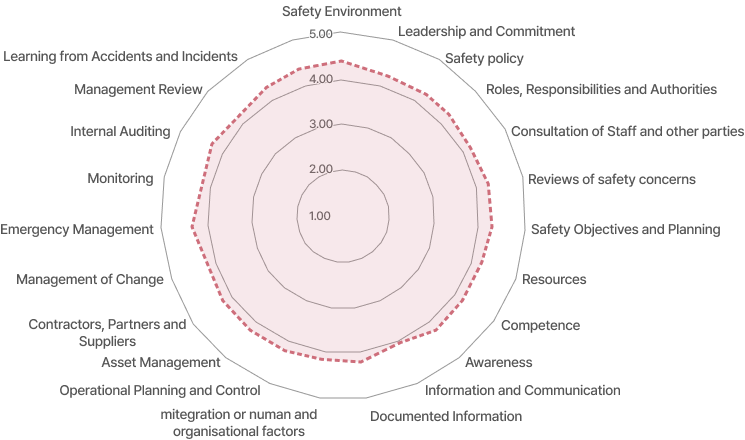
Source: Final project report
On-site Diagnosis Results of Malaysia’s Railway Safety Culture
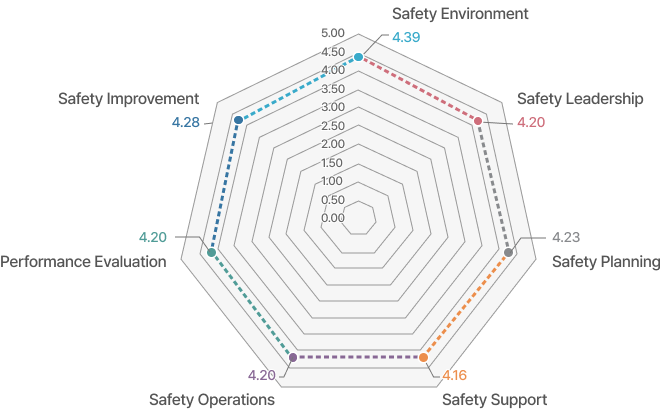
Source: Final project report
Translating Policy into On-site Change
KSP policy recommendations have begun to be implemented into real-world systems and field operations. Discussions on introducing a safety certification system for railway operators have commenced, the Railway Protection Zone (RPZ) regulations have been refined, and an accident investigation process—linking reporting, independent investigation, and root cause analysis—is steadily taking shape.
In the technical domain, 16 new Malaysia Railway Industry Standards (MRIS) were established, and APAD introduced safety verification procedures for new rolling stock. With the expansion of training and certification systems based on the National Occupational Skills Standards (NOSS), a foundation for systematically cultivating railway experts has been laid.
These changes mark the beginning of a policy shift, viewing railway safety not as a set of disconnected regulations, but as an integrated, national-level safety management system.
Korea's roadmap did not simply change laws — it clearly showed us the direction we need to take.

Designing the Future of the Railway Industry
The greatest achievement of this project is not the improvement of individual regulations, but the introduction of a policy paradigm that views railway safety as a holistic national system.
Local stakeholders highly valued the fact that the Korean railway safety model integrates legislation, technical standards, certification, and training into a single framework. They also noted that the policy roadmap—divided into short, medium, and long-term phases—was instrumental in clarifying priorities and increasing the feasibility of implementation.
Visit to Korea's Smart Operations Control Center for Transfer of Railway Safety System
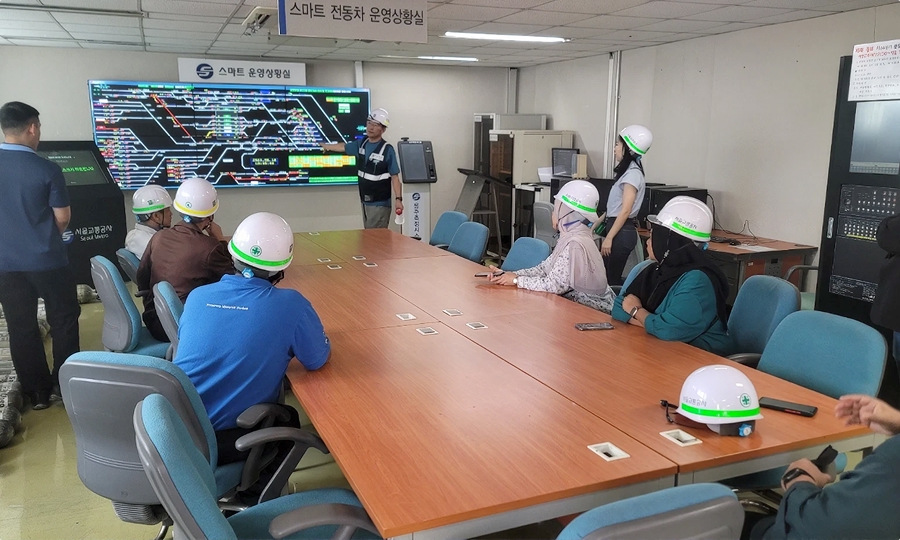
This project aligns with Malaysia’s National Transport Policy 2019–2030, the New Industrial Master Plan (NIMP) 2030, and the upcoming Malaysia Railway Masterplan 2050, further solidifying the foundations of national railway policy.
Challenges remain, however, such as inter-ministerial coordination, securing specialized talent, and technological localization, all of which will require sustained effort.
The Journey Continues: From Policy Cooperation to Technical Collaboration
Establishing a railway safety management system was not the end, but a new beginning. Throughout the project, the Malaysian government confirmed that for a sustainable railway industry, both safety management systems and the localization of railway technology, alongside R&DB (Research & Development and Business) capabilities, are essential.
Building on the KSP outcomes, a follow-up project, "Development of an R&DB Roadmap for Railway Technology Localization in Malaysia (2025/26 KSP)," is now underway. Together with the Malaysian government, KDI and the Korea Railroad Research Institute (KRRI) are co-designing strategies for technology localization, building an R&D ecosystem, and creating industrial cooperation models, taking their partnership to the next level.
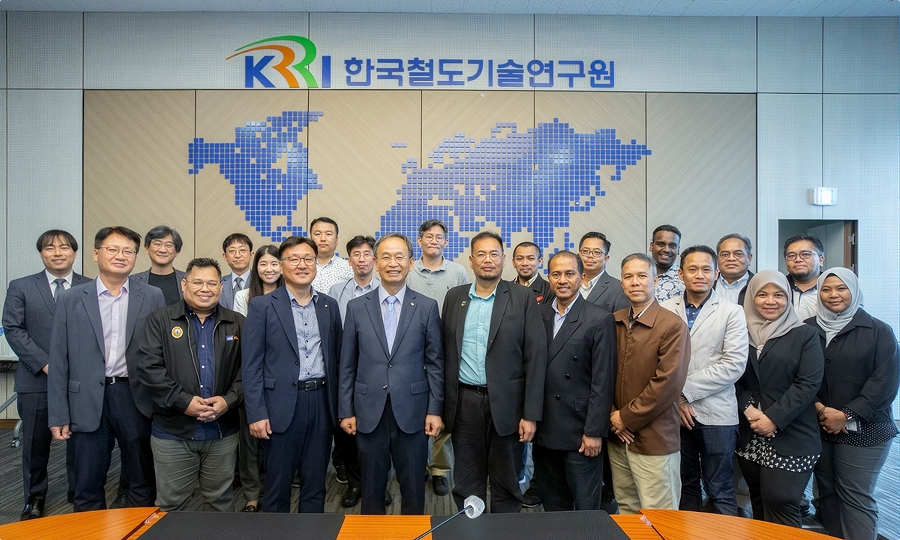
This serves as a flagship case demonstrating the KSP's evolution: from policy cooperation to technical collaboration, and further into industrial partnership.
The cooperation between Korea and Malaysia extends beyond making railways safer. The journey to build a sustainable railway ecosystem by connecting people, technology, and systems continues.
| Key Highlights | Impact |
|---|---|
| ~2,100 km | Supported the advancement of Malaysia's railway safety management system |
| 16 Standards | Establishment of Malaysia Railway Industry Standards (MRIS) |
| 3 Key Agencies | Strengthened cooperation among MOT, MRDC, and APAD |
| Integrated System | Built a policy package linking law, standards, certification, and training |
| Expanded Cooperation | Co-development of an R&DB roadmap for rail technology localization (KDI-KRRI) |